Written by Chay Bacani-Florencio
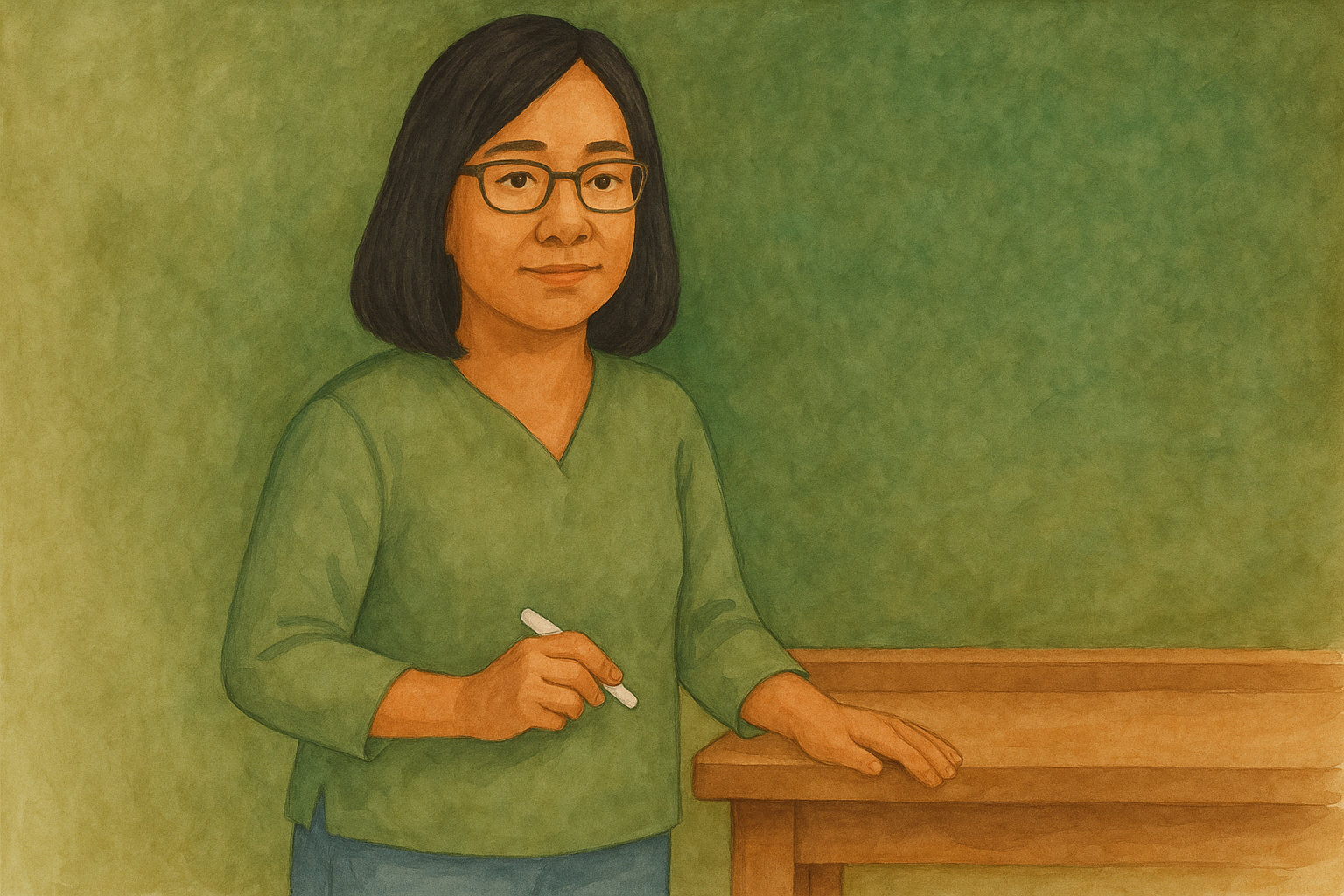
At 41, Tessa Albano hoped to create a better life for her daughter, husband, parents, and extended family in Cebu, Philippines. After Super Typhoon Rai (locally known as Typhoon Odette) devastated much of the Visayas and Mindanao in December 2021, she began searching for job opportunities in the United States once power and connectivity were restored in January 2022.
Struggling with Familial Support
Tessa sent direct applications to over 100 schools. While many responded with interest, progress was often halted by technicalities or shifting requirements. In one instance, a school retracted a job posting—claiming it was for internal hiring only—after learning she was applying from outside the United States.
It was then when she felt as though her failed applications were somehow the result of her father’s silent prayers for her to stay. Tessa’s father, concerned for her well-being, feared that her visible disability—being a person with clubfoot—would make her vulnerable to discrimination in a foreign country. Then, an offer came from a school in South Dakota. It was also in this state where Tessa was able to assure her father that there is a Catholic church near the school and the prospective living arrangements.
Facing Exclusion During the Medical Examination
Tessa remained honest with her interviews, not passing the chance to ask will it be a hindrance if she has a disability. The school assured her that as long as she can perform her job as a teacher, it would not be an issue.
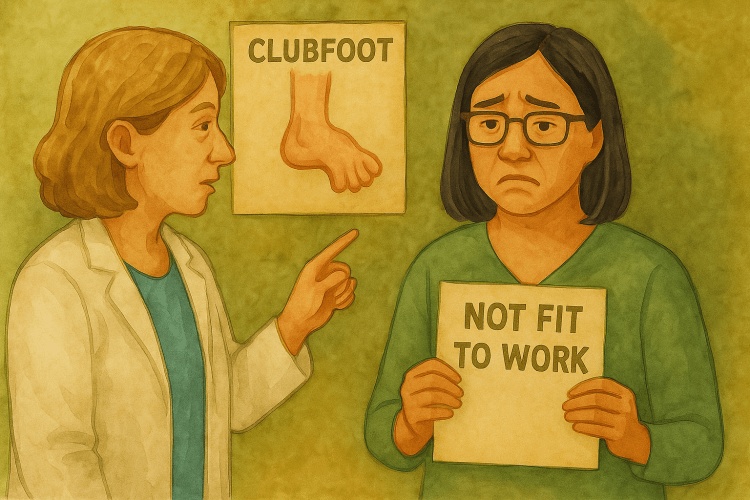
Relief turned to despair. Tessa recalled feeling silently judged by the accredited staff conducting the Pre-Employment Medical Examination (PEME) before her deployment. And though her evaluation indicated no health problems, her visible physical condition triggered the verdict: “Not fit to work.”
The decision could have unfairly excluded her from being employed as her disability had no impact on her ability to do the job, however Tessa did not lose hope. Instead, with her husband at her side—who made her feel seen, respected, and beautiful—she contacted her future employer for support. The school’s response was swift and clear. They fully acknowledge that she has a disability, and that they still want her on board. The school, already home to teachers who used wheelchairs, stood by Tessa: capability over condition. Although she was not classified as “fit to work” under the standard results of the PEME, she was issued a medical waiver that enabled her to proceed with securing visa documentation and deployment. This process highlights the systemic barriers faced by persons with disabilities, while formally deemed unfit according to rigid medical standards, she was still permitted to migrate under exception rather than inclusion. The waiver served as a workaround rather than an affirmation of her rights or capabilities—showing how medicalized and risk-averse systems continue to frame persons with disabilities as liabilities, rather than enabling their participation through reasonable accommodation and inclusive assessments.
Welcoming New Beginnings
By the time she arrived in the U.S. in November 2022, her principal had already prepared her apartment – furnished with her necessities and appliances. She did not just feel welcomed—she was greatly supported and celebrated.
Nine months later, Tessa was able to bring her husband and daughter to join her as dependents. She also continuously helps her parents and relatives in the Philippines, financially.
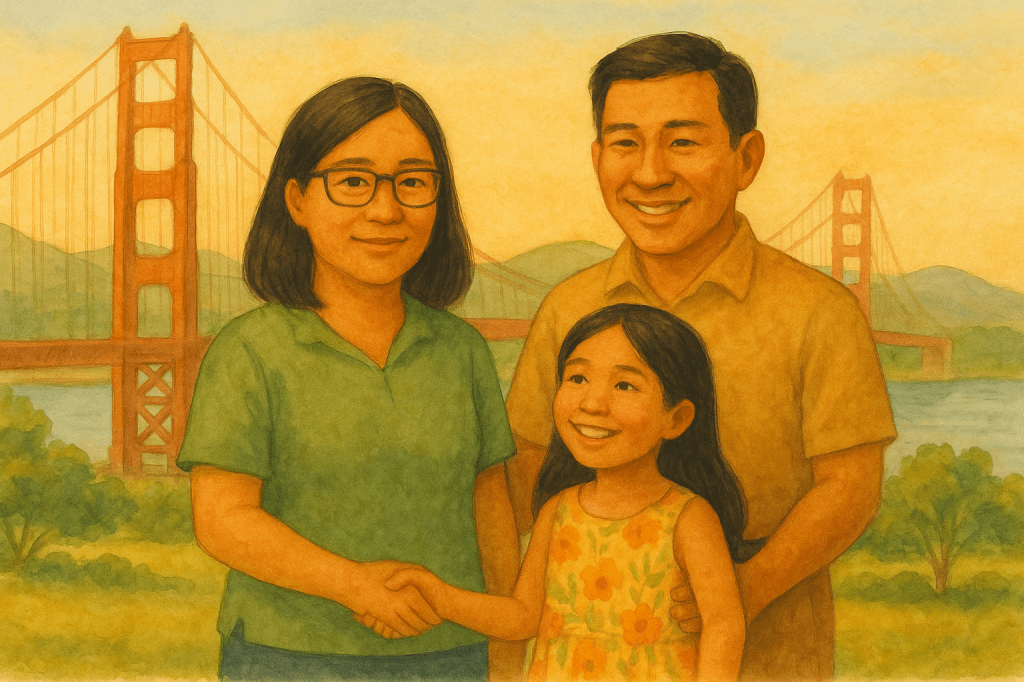
Tessa is actively supporting an organization of persons with disabilities in the Philippines where she served as their official secretary. She now also assists fellow persons with orthopedic disabilities to pursue their dreams in migrating, with persistence and courage.
Images generated with assistance of OpenAI, images conceptualized and final edit by Ferdinand Paraan Jr.
 Disability Migration Network (DMN)