Written by Chay Bacani-Florencio
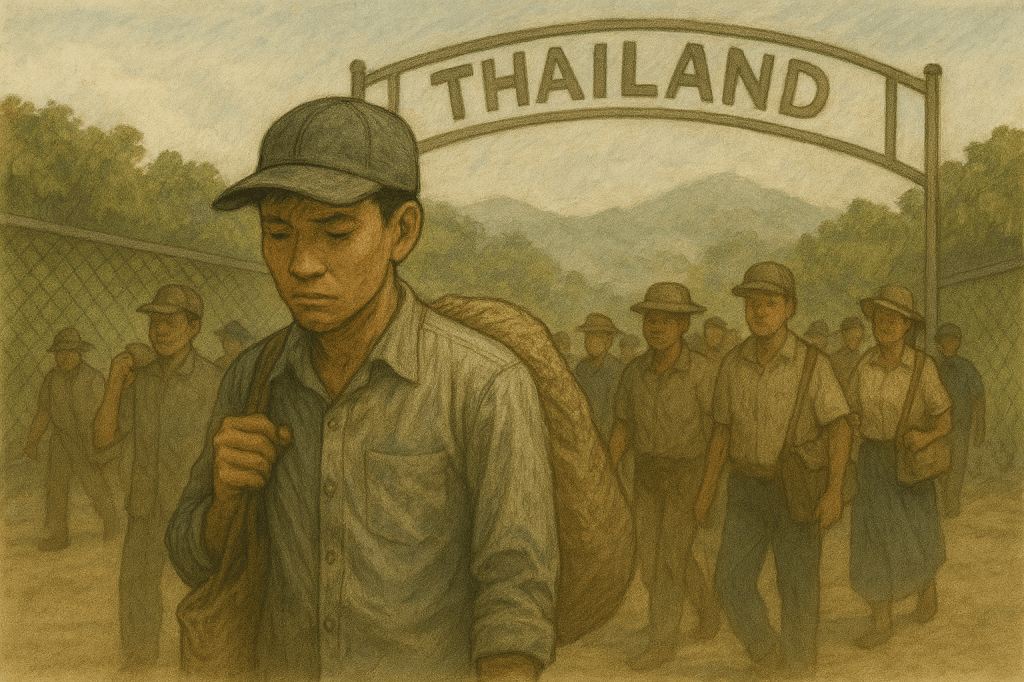
Ko Min Tun, a 38-year-old man, lived most of his life in Myanmar during a time of limited opportunity and political unrest. At the early age of 12, he was enlisted in the Myanmar army, and has skipped formal education ever since. After the conflict, like many migrant workers during the nineties, a lack of job opportunities and a relatively easy time crossing the Thai border, led him to seek work abroad. He sought varied livelihood opportunities in the informal labour sector in Thailand, where the demand for undocumented migrant workers was high. He earned THB 67 (US$ 2) a day at that time.
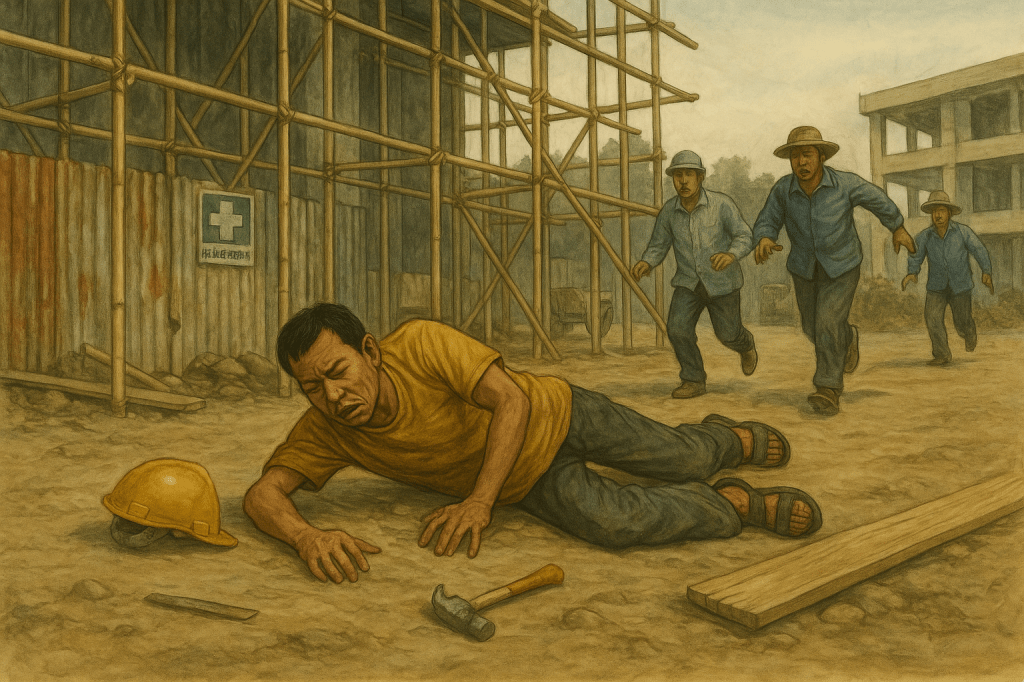
In 1996, Ko Min Tun fell while preparing the roof of a building at a Thai construction site. This accident caused a severe spinal cord injury. He underwent multiple surgeries where some internal organs needed to be removed. He now also has a colostomy bag attached to his stomach, and is paralyzed from the chest down, rendering him completely reliant on a wheelchair to stay mobile.
Settlement for Partial Employer-Paid Medical Care and Lack of Compensation
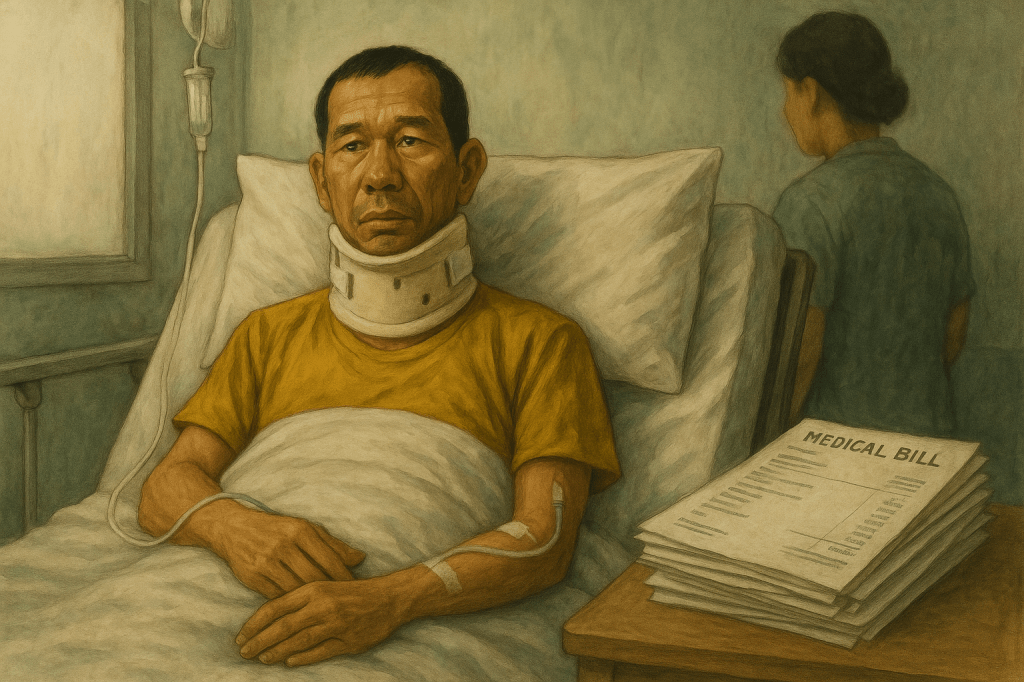
Ko Min Tun’s hospitalisation and treatments amounted to nearly THB 700,000 (US$ 20,000). His employer offered him two options: lifetime support for medical expenses or a one-off settlement of THB 200,000 (US$ 6,165). This amounted to less than a third of the immediate medical costs., Therefore, no additional compensation was offered.. He decided to accept the settlement, knowing there were no guarantees of lifetime support from his employer. A Civil Society Organisation (CSOs) in Thailand made substantial contributions for his immediate care, while he paid what he could out of pocket. Beyond the 6 months of physical therapy at the hospital, he received little to no follow-up care. This has left him to cope on his own.
Struggle Against Irregular Work and Wage Discrimination
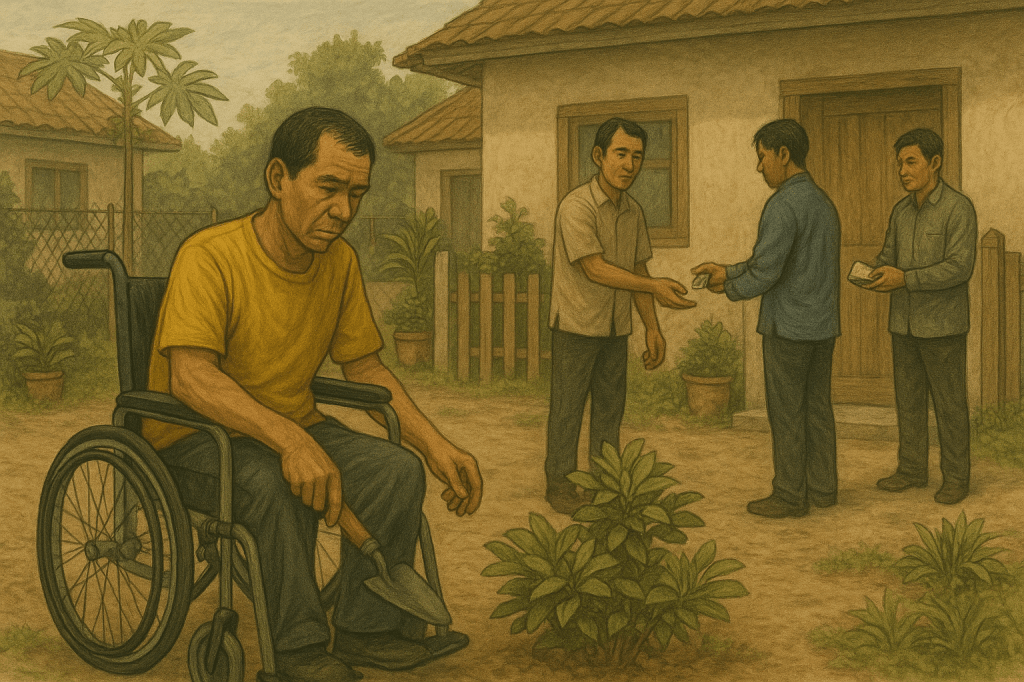
Ko Min Tun attempted to get back into the workforce in Thailand by initially taking on lighter jobs such as gardening. He believed that he was paid less than other workers because of his disability. He relies heavily on sympathetic employers who demand his services irregularly, but this also makes it hard for him to acquire documents to stay and work legally as he would need an employer to hire him full time. One employer had to stop requiring his services as the employer came under police investigation upon being alerted that he was hiring undocumented workers. Ko Min Tun was let go and instead began cleaning houses. He brought in THB 200 (US$ 6) per day cleaning, which was earned four times a week at most, and seldom only twice a week.
Lack of Health Care Benefits and Assistive Devices
Ko Min Tun had been excluded from even the most basic state healthcare and social security coverage as he struggled to renew his health insurance due to additional ID requirements, which were previously waived for migrant workers as long as they were vouched for by their employers. He was refused help by the Organisations of Persons with Disabilities (OPDs) as he is not Thai. And while a CSO donated a wheelchair, after long years of use, it has become severely damaged. Aside from the continuous use of a damaged wheelchair, the lack of opportunity to replace his urinary catheter and bag was a major concern, as they were an expense he could not afford. He has been left with no choice but to manage with the equipment and assistive devices he currently has, and has to clean them on his own regularly, which puts his health at further risk due to the increased likelihood of infections.
Without A Home
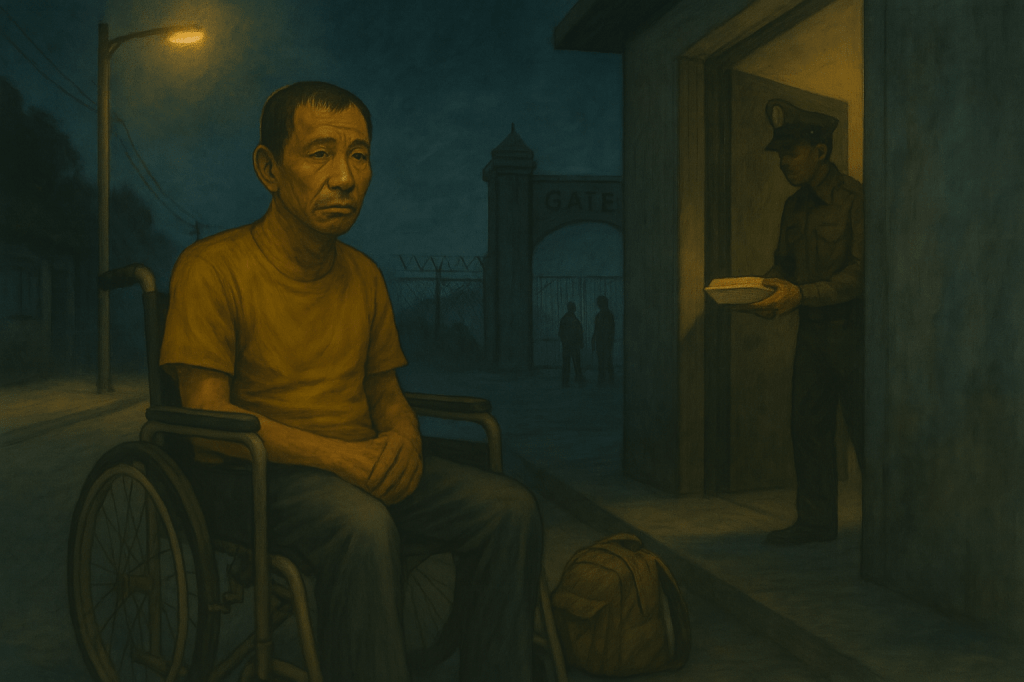
With no contractual or regular employment, Ko Min Tun suffers from ongoing homelessness as his day-to-day opportunities do not offer permanent accommodations. He solely relies on temporary living arrangements, which consist of shelters, monasteries, and foster homes for the elderly. All of which allowed him a limited time of reprieve, sometimes even only three nights at a time within a span of a week. On some occasions, while many migrant workers fear arrest and deportation, he sees the police station as a means to an end where sympathetic police officers offer him not just a place to sleep but also food for the night.
Discrimination Due to Disability
Ko Min Tun reports that he has often been verbally insulted in public. Outside of shelters, he has suffered hearing remarks such as “This is your karma,” “If I were you, I would commit suicide,” and “You should die soon.” To these, he responds with dignity, “To be human is difficult. It is not worth it to kill myself. Whatever other people say, to live as a human is my point.” However, he has also admitted to having internalised such abuse and at times has felt resigned to accept their derogatory statements.
Surviving Without State Support
When Ko Min Tun once attempted to return to Myanmar, border authorities on the Myanmar side demanded to see his identification. Since he was not able to provide any, he was denied passage to his home country. On the one hand, he has also not been able to gain a regularised status in Thailand. For him, he is neither Thai for the Thai people, nor Myanmar for those who are from and live in Myanmar. Without any passport or recognition from his home country, he, like some other migrant workers, is in a position that is effectively stateless, invisible, and discriminated against.
Ko Min Tun has not sought support from the Thai government, believing that he would be denied such privileges as these are restricted only to Thai nationals. Even the OPDs often transact only with those who are identified as citizens of the state. He desperately relies on the generosity of CSOs and other charitable institutions, which suffice only for his short-term needs.
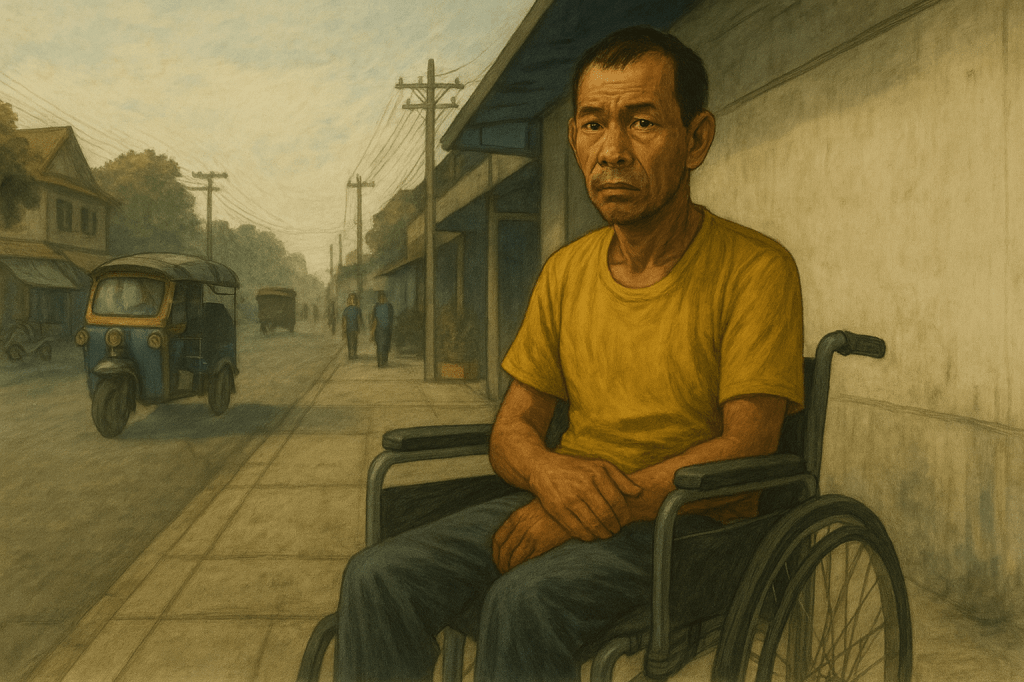
Ko Min Tun’s stateless and unsustainable situation illustrates the injustices and internalized abuse that migrant workers with disabilities are forced to accept. The double discrimination on both migration status and disability by the community denies them a dignified life, void of inclusive participation in society. This calls for the urgent need to uphold more inclusive OPD support services, equal access to healthcare, housing, and social security, which should be provided regardless of identified documentation status or citizenship of belonging.
Images generated with assistance of OpenAI, images conceptualized and final edit by Ferdinand Paraan Jr.
 Disability Migration Network (DMN)