Written by Chay Bacani-Florencio
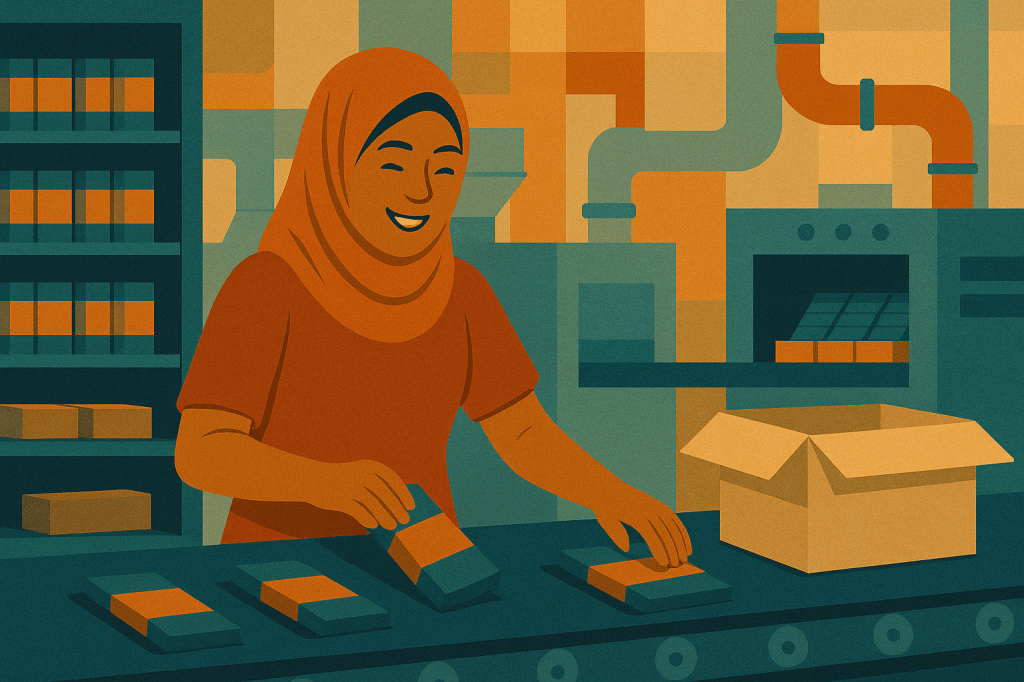
Joy Torreno, from the Philippines, began working in a chocolate packaging factory in Kuwait on January 31, 2023. It was her first time working abroad, secured under a two-year contract. She continued to make voluntary contributions to Philippine government social protection programs such as the Social Security System (SSS), and Pag-IBIG.
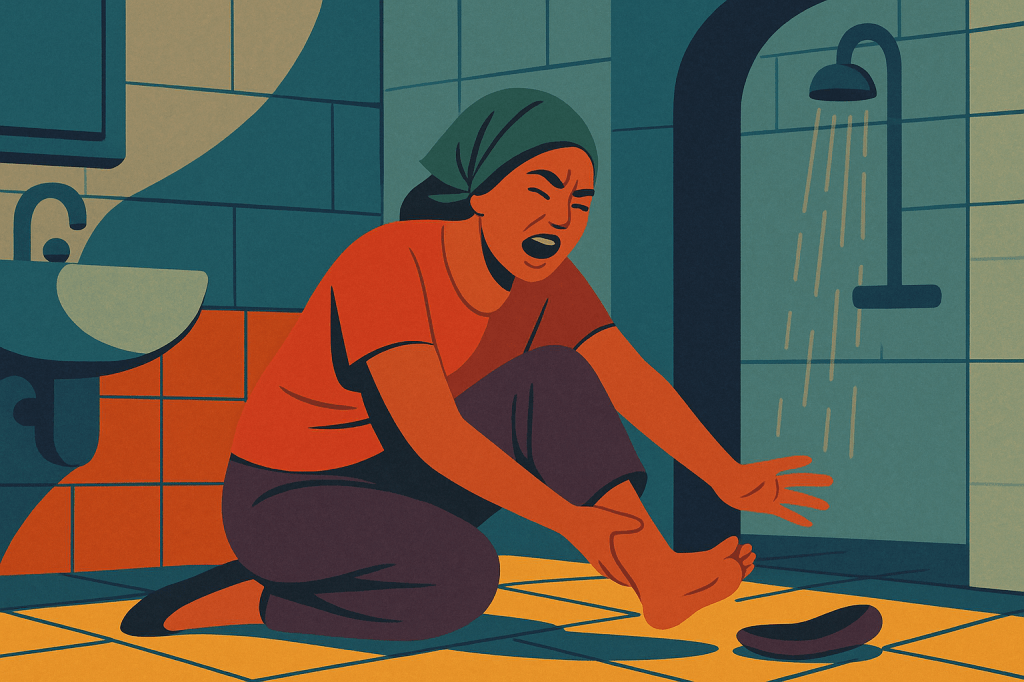
Nearly a year into her job, Joy slipped in the bathroom of her employer-provided housing and fractured her heel. At first, unaware of the injury’s severity, she continued working while limping.
When the pain became unbearable, she requested medical attention at a government hospital. However, there were no interpreters, and the medical staff did not communicate in English, leaving her anxious throughout the process.
During her initial recovery in Kuwait, Joy relied heavily on her older brother, who was also working in Kuwait, for daily support. This request was due to Joy’s struggle to move around independently, and the fact that no one from her work accommodation was available to assist as they were all preoccupied with their own shifts. Although she was granted paid medical leave, her contract did not cover accident-related expenses. She paid out-of-pocket for all hospital visits, check-ups, and medications. No mobility aid was provided so she used a crutch donated by her brother’s friend.
Returning Home to Recover

Six weeks after the accident, Joy’s follow-up X-ray revealed that her bones were still not realigned. Surgery was recommended. In April 2024, she returned home covering all travel and anticipated hospital expenses herself for a metal implant as her employer did not offer to reimburse those costs due to her unfinished contract. She deliberately chose to undergo surgery at the Philippine Orthopedic Center as she felt more confident receiving treatment in a familiar environment where she would be adequately understood and supported. Additionally, she feared that after the operation, her employer would make her return immediately as she had already had paid time off. And while assistance came from the government’s social welfare program, less than half of the cost was still shouldered from her own savings and with her family’s help.

Joy’s rehabilitation continued through regular therapy and check-ups, assisted by her mother. She received modest disability assistance from the Overseas Workers Welfare Administration (OWWA) admitting it was limited, and her application for social security benefits was denied due to missing documentation from her employer.
Onward amidst Obstacles
Her employer had offered a three-month leave with the possibility of returning to work, but her duties required prolonged standing, which she could no longer manage. Though she could walk short distances unaided, Joy continued to experience pain and must avoid strenuous activities such as running or jumping.
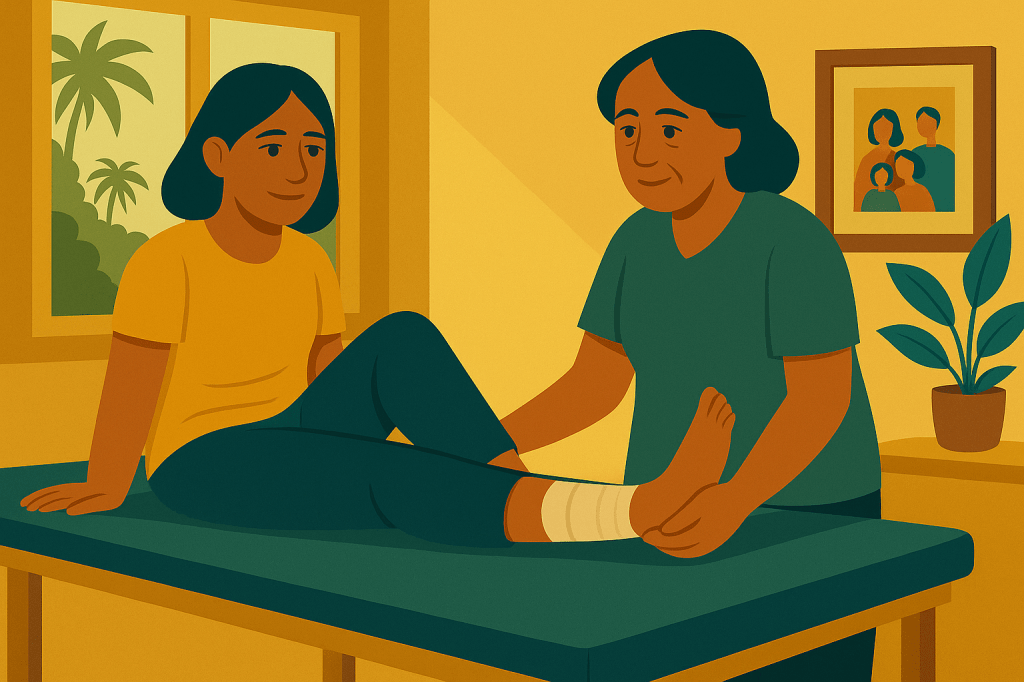
Upon her return, Joy did not receive any psychosocial or reintegration support. She navigated recovery and reintegration with minimal guidance and expressed how difficult it was to manage her situation without clear guidance and knowledge of her rights.
Despite those obstacles, Joy chose not to file any complaints and refused to demand any further financial assistance from her employer. At the time of the interview, she remained optimistic about working abroad again, saying she will need documentation for her metal implant when traveling, and that she would be more cautious about her health this time around.
Joy’s experience magnifies the systemic barriers faced by migrant workers with acquired disabilities – the lack of language interpretation and recovery support whilst in the migrating country, and the limited reintegration assistance upon return. Given these existing conditions, the absence of inclusive and rights-based policies both in the migrating and home countries leaves persons with acquired disabilities like Joy to tend for themselves for recovery and livelihood support. And while her acquired disability significantly affects her employment opportunities, it is her hopeful spirit that allows her to carry on.
Images generated with assistance of OpenAI, images conceptualized and final edit by Ferdinand Paraan Jr.
 Disability Migration Network (DMN)