Written by Chay Bacani-Florencio
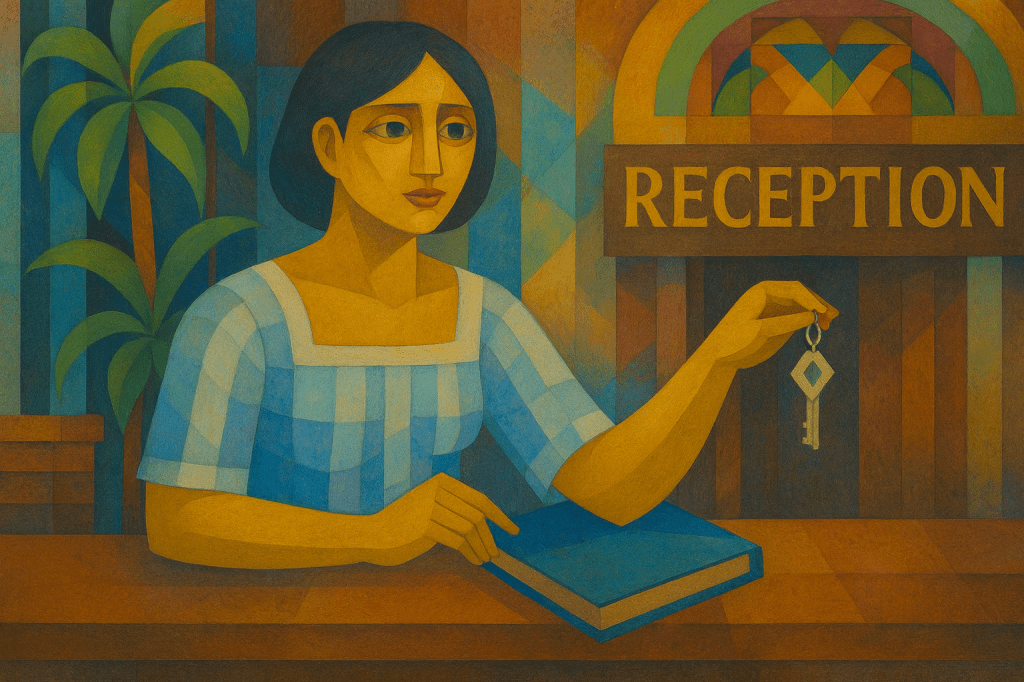
Grace Chua is a 66-year-old Filipina who began her career abroad when she moved to Laos more than 25 years ago after experiencing marital problems that led to her separation from her husband. She entered the country on a tourist visa and explored opportunities to secure employment. Her persistence paid off when she was employed at a Thai accounting firm in Laos, where she worked for six months. Later she transitioned into the hospitality sector, taking a position at a French hotel. Lastly, she secured a role as a Front Office Manager where she worked for 13 years before the tragic turn of events.
On July 17, 2017, Grace Chua suddenly suffered a stroke while at work and was rushed to the nearest local hospital by her co-workers. The hospital lacked the facilities to provide the level of care required for her condition. To ensure proper medical care, she needed to be transferred and was then airlifted to an International Hospital in Thailand. She has experienced paralysis of the right side of her body ever since.

Over the course of one month, she received the necessary treatment and therapy sessions for her limbs. Unfortunately, her doctors informed her that she will not regain full strength of her right arm. Throughout her stay, Grace’s employer covered her medical expenses via health insurance.
Her son works as a hospital orderly in Thailand. On his day off, he would accompany Grace back to the hospital for more therapy. Her employer’s medical insurance partially covered her further muscle-strengthening therapy, which was supplemented by her son for a few more months.
Struggling with Illness while in Isolation
After staying and receiving financial support for her rehabilitation from her son and daughter-in-law in Thailand for six months, Grace was sent back to the Philippines to stay with her sister. This decision made her feel unwanted and uncared for. In her sister’s home in the Philippines, she was left alone in the confines of her bedroom, where her meals were delivered in the morning, and the plates and utensils collected at night. Although she has internet access and hears online Catholic masses daily, with little to no interaction between her sister and her granddaughter, she struggled with loneliness and suicidal thoughts. At the time of the interview, it had also been five years since she last spoke with her son.
Grace receives a small monthly pension from the Philippine government. Her brother drives her to the bank every month for its withdrawal. She did not seek further government assistance. She has not received any other form of physical and psychological therapy since she left Thailand. Her wheelchair was left there as well, and with limited finances, she couldn’t afford to buy a new one.

The End of Care and Start of Defeat
Grace expressed her strong desire to recover and return to work. Instead, faced with exclusion from her family, and without any rehabilitation and reintegration assistance from her country, she cries in despair as her aspirations remain unfulfilled. Without the reassuring presence of family, friends, and community, her current living conditions remain neglected and devoid of care.
Migrant workers with disabilities like Grace face the invisible crisis of aging in isolation that often leads to preventable mental health issues. This suffering could have been avoided with psycho-social support and social protection for persons with disabilities. The lack of coordinated healthcare, and community-based support may be addressed through respectful and inclusive housing policies, access to assistive technologies and personal assistants, and the development of community programs that promote participation and reduce stigma and isolation.
Images generated with assistance of OpenAI, images conceptualized and final edit by Ferdinand Paraan Jr.
 Disability Migration Network (DMN)