Written by Chay Bacani-Florencio
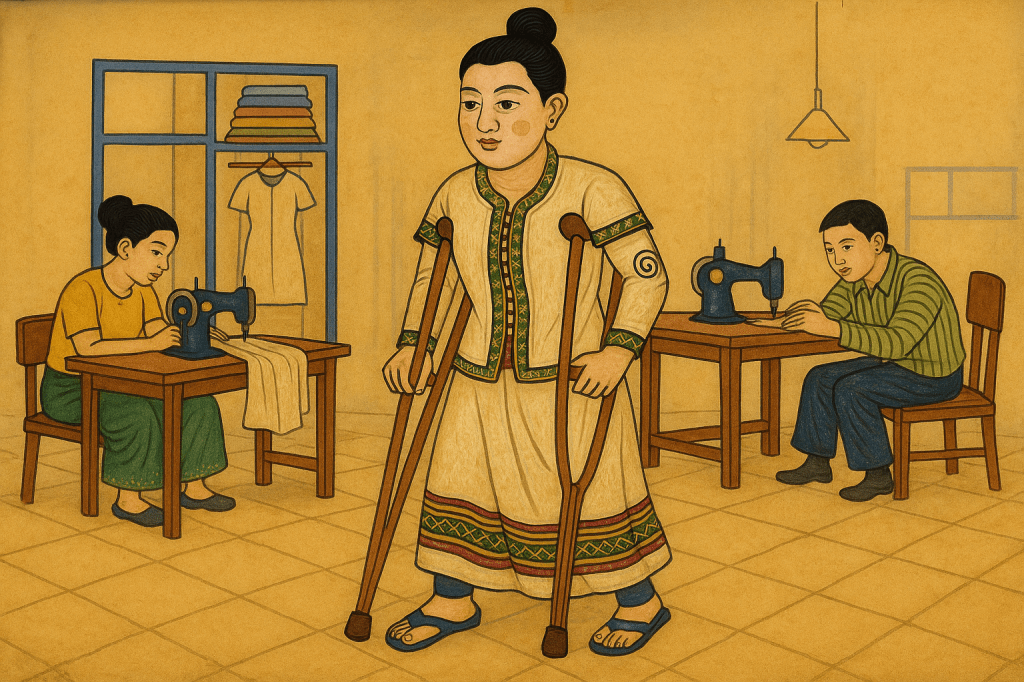
Ma Cing Ngaih Zam is a 39-year-old Myanmar national, experiences post-poliomobility limitations especially when walking up stairs and on uneven terrain. She can navigate independently on level ground, more so as she was shaped by the confidence and trust her parents instilled in her from an early age. After years of working seven days a week in a garment factory in Myanmar, she was encouraged by a neighbor from church to seek better opportunities abroad. She decided to migrate to Thailand in hopes of fairer labour conditions and a more balanced life.
A Perilous Journey for a Necessary Move
While Ma Cing Ngaih Zam enlisted a recruiter, little did she know that she would embark on a dangerous journey, what she described as akin to human trafficking. First, she boarded a flight to Tachilek, travelled via motorbike to the border, and even needed to board a boat to reach the shores of Thailand.

Due to a lack of information Ma Cing Ngaih Zam was not made aware that reaching Thailand would require taking irregular and potentially dangerous routes. Her journey continued by boat under rushed and unsafe conditions, in the middle of the night when border crossings are hardest to detect. She froze when she realised she had to climb stairs to board the boat. The crew repeatedly shouted at her to hurry up. And when she did not respond, they carried her on and off the vessel. She also had to ride in the back of the car with twenty other people to reach her destination. Cramped, hungry, and weary the whole trip, she feared her legs would be further injured in the process.
It was only upon arrival that Ma Cing Ngaih Zam discovered her recruiter had not disclosed her disability to the employer. Despite the risks she took to reach Thailand, she was denied employment on the basis of her disability. Yet she did not give up. She rented a sewing machine, earned the praise and referrals of the community and began taking orders. When her neighborhood was hit by a flood, it was this same community that helped her evacuate to safety.
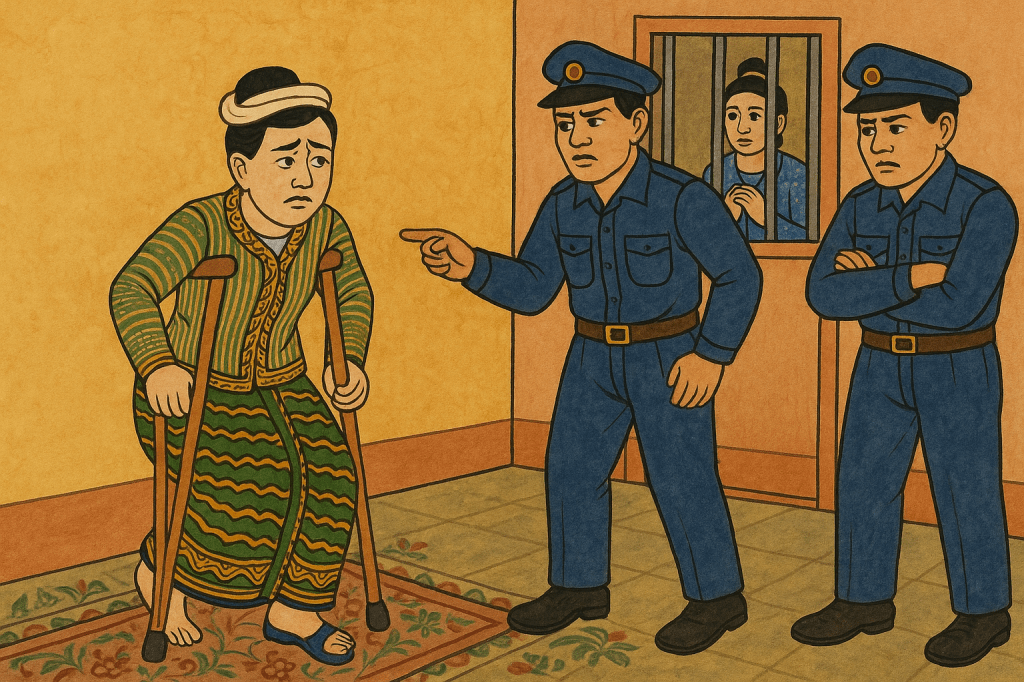
One day, Ma Cing Ngaih Zam was travelling and accidentally left her labour card. Inspected with bouts of suspicion, she was questioned about her legs. This angered her almost to the point of being detained. Unable to pay the full fine, she was ultimately released after paying a reduced amount—an experience that left her feeling both vulnerable and disrespected.
Return to Home and Braving through Repeated Discrimination
After two and a half years in Thailand, Ma Cing Ngaih Zam returned to Myanmar to provide support for her sister-in-law as her brother migrated to Malaysia. With the hopes of continuing her livelihood as her family did not have any source of income, she started selling hand-made accessories, even employing other women, to give back to her community.
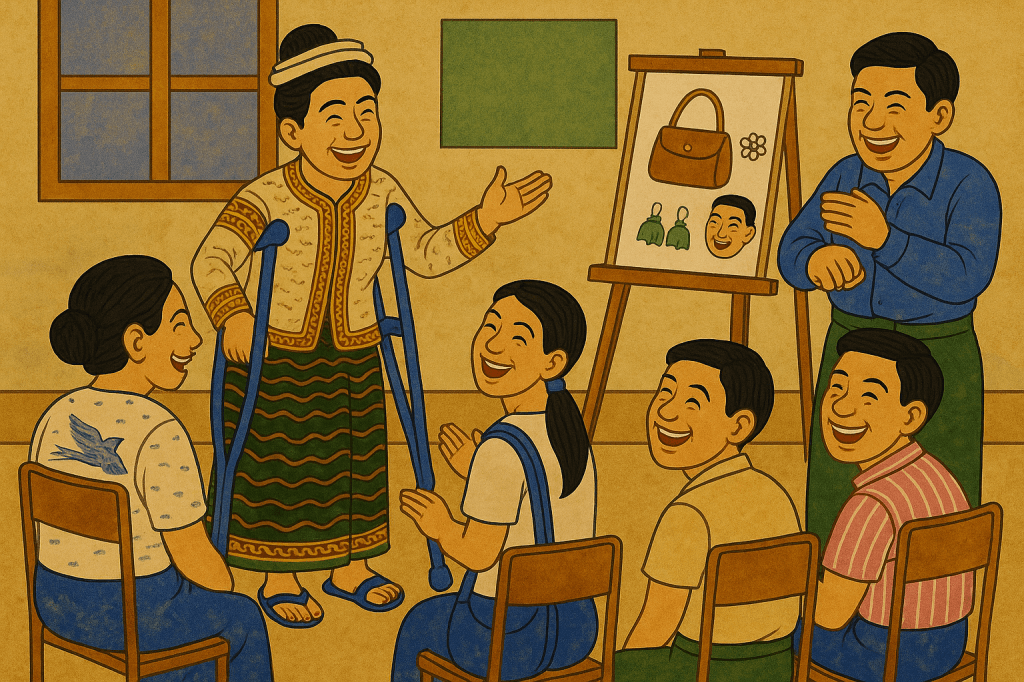
Before the era of military unrest and the COVID-19 pandemic, Ma Cing Ngaih Zam attended a free training by a visiting French designer who, unfortunately, had a language interpreter who was disgusted to be with her and the other persons with disabilities. They made reparations and invited them again to another batch of training, this time ensuring respectful and inclusive treatment.
Rallying for Inclusive and Respectful Support
Ma Cing Ngaih Zam’s experience reveals the deep-rooted prejudice faced by persons with disabilities, both in their home country and abroad. Despite the risks of detention, and deportation, she overcame these challenges through the support of her community and her own unwavering determination and self-agency.
This story acknowledges the need to respect and recognize persons with disabilities and attain protection from abuse as individuals and in solidarity with a community. And while Ma Cing Ngaih Zam survived her journey and braved through discrimination, her life is a reminder that while individual strength can carry one far, inclusive systems and accountable institutions are essential to ensuring that no one is left behind.
Images generated with assistance of OpenAI, images conceptualized and final edit by Ferdinand Paraan Jr.
 Disability Migration Network (DMN)