Written by Chay Bacani-Florencio
Chanthy Rath, a 31-year-old Cambodian, now estranged from his wife and child after sustaining a life-altering injury while working in a construction site in Thailand. At the time of his interview, he needed the support of his sister to recall the events that led to his current status of unemployment.
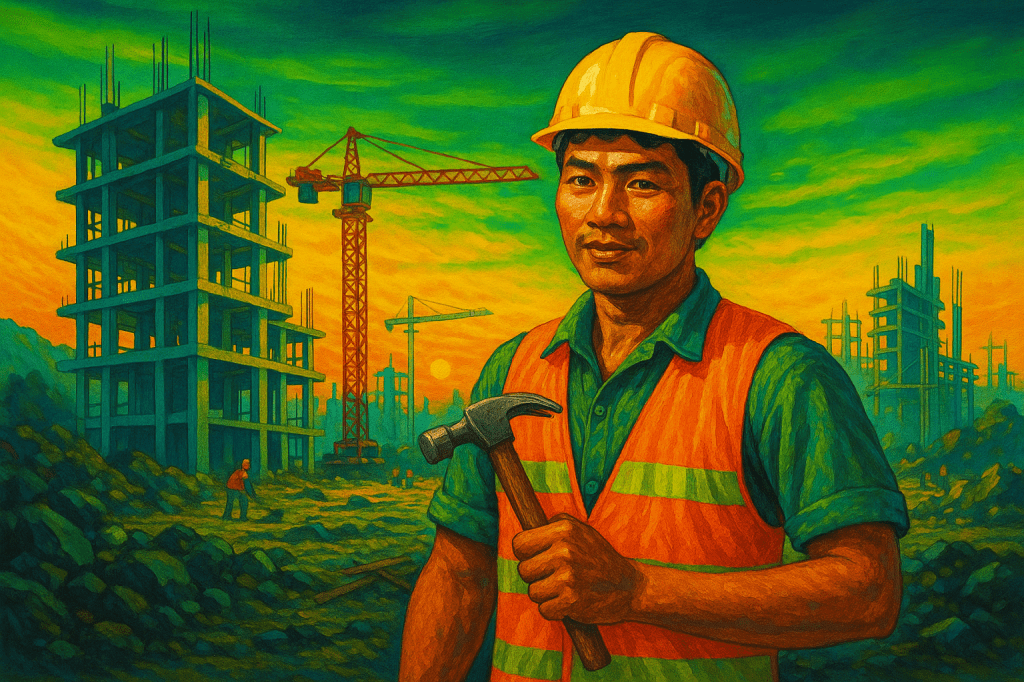
Chanthy Rath started his migration journey to Thailand when he learned of better job opportunities from his neighbours, and that they could be granted employment through legal channels. He immediately began as a crew member on a fishing boat in 2009. In 2014 he went out one late night to drink leisurely, but the police caught and arrested him. He was deported shortly after, while his passport and visa remained in the possession of his supervisor.
From Injury to Isolation
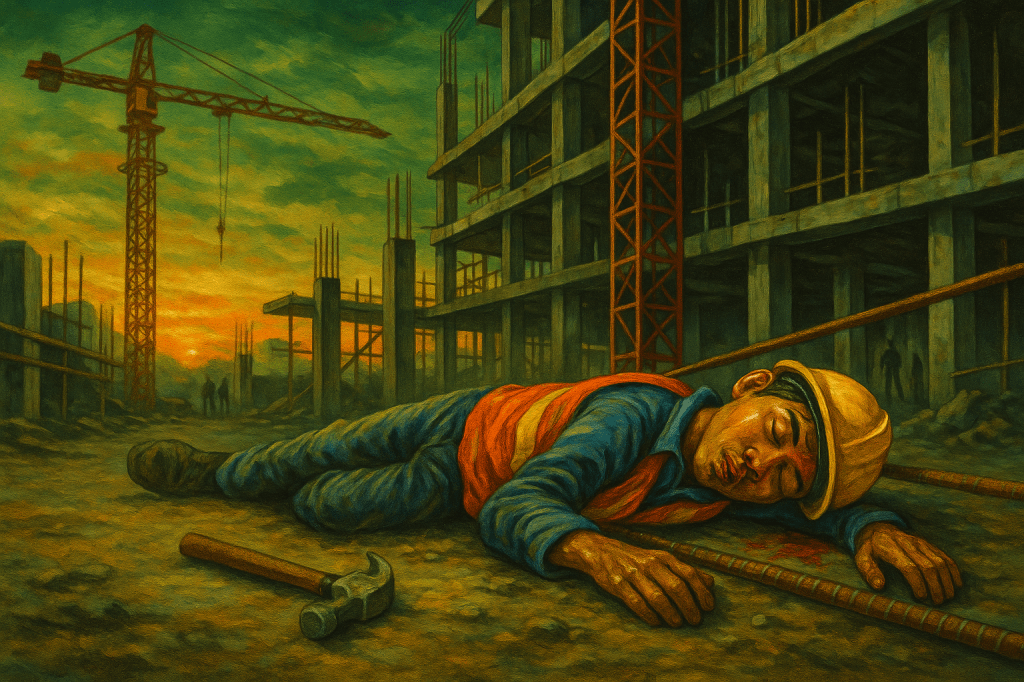
Chanthy Rath returned to Thailand in 2020 and was employed as a construction worker but had no written contract. While alone on the first floor of a 40-storey construction site, he slipped – even while holding on to rails – and fell. Unconscious and bleeding alone for 30 minutes before anyone noticed, he was eventually rushed to the hospital, where he was in a state of coma. The injury also left his nervous system severely damaged, rendering him unable to walk. His employer covered one month’s worth of hospital bills and the cost of his return home, as he didn’t want to continue paying his bills. His sister, who was also a construction worker, needed to leave her job and her income to care for him during transit, while he relied on an oxygen tank to survive.
When he returned home to Cambodia, his village raised money to fund Chanthy Rath’s treatment in Vietnam, where his family believed he would receive better care and access to more qualified doctors. However, this would later leave his family in debt. His sister stayed with him in the hospital until he was discharged and able to go home.
Chanthy Rant had no knowledge how to pursue justice or to get workplace compensation for his injury, as his employer did not provide medical leave pay or accident insurance. After leaving the hospital, he received no support services from either the government of Thailand or Cambodia. His wife had full access to his finances while they were living together in Thailand. As she had full control over his income, most of this was sent to his mother-in-law, and what was left was remitted to his mother only during special occasions. Together with their daughter, she visited him for the early days of his hospital stay. Now abandoned by his wife and longing to see his daughter, he has not seen them since.
Chanthy Rath’s mother remained his caregiver and managed his recovery and daily life upon going back from his treatment in Viet Nam, since his sister, who was also working in Thailand, needed to go back to support her own family, and repay the debt they owed to the community. He received no physical or psychological therapy, or any structured reintegration program from the government.
The Loss of Income, Independence, and Involvement
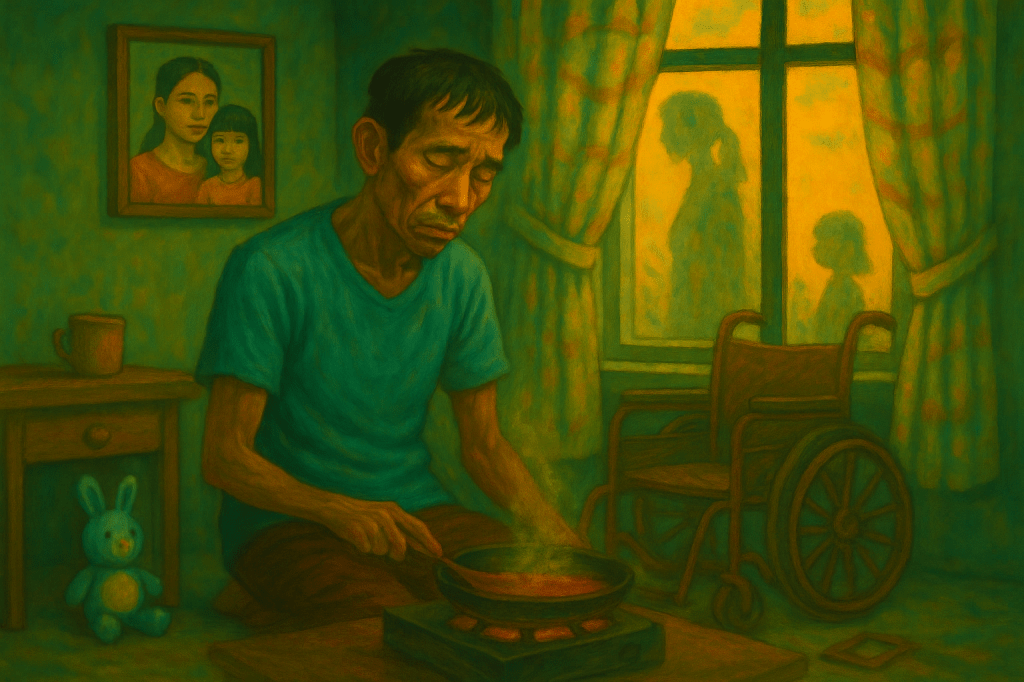
After gradually regaining his memory a year or two after the incident, Chanthy Rath has not been able to return to work and can only manage small jobs like cooking, which allows him to earn small fees. His boss calls to ask about his condition every now and then but still refuses to rehire him due to the risk of reinjury. His neighbors care deeply about his welfare, but when they start to show pity for him, he can’t help but feel belittled and offended.
Chanthy Rath’s loss of memory, mobility, independence, and involvement in his own family’s providence speaks volumes about how migrant workers with acquired disabilities are silenced and disempowered when they lack work contracts; when they are deported without due process; and when they lack sufficient medical treatment and post-injury support. Even as he aspires to work again, he is left to remember, with painful clarity, how unsafe working conditions cause permanent damage, whilst forced to forget the hope of a more inclusive, dignified, and protected future for migrant workers with disabilities.
Images generated with assistance of OpenAI, images conceptualized and final edit by Ferdinand Paraan Jr.
 Disability Migration Network (DMN)