Written by Chay Bacani-Florencio
Andi Prasetyo, a 35-year-old Indonesian, has been a migrant worker in Malaysia since 2010. He is currently living with his wife in Malaysia, while their children are in Indonesia. He was able to secure a work visa through his high school’s programme, and ever since, he has had construction-related roles. The latest of these was to serve as an electrician. However, in March 2023, Andi encountered a road accident that would alter his way of life.

Andi was riding his motorcycle going home when a car hit him and rendered him unconscious. He was fetched by an ambulance and taken to a first-class hospital where it was discovered that he had two broken bones in his lower back. His treatment and rehabilitation took five months. As he cannot voluntarily urinate or hold his urine, he has a catheter and urine bag which are not comfortable to have on every day permanently. And while his mobility improved, climbing stairs has proven to be painful. This proves to be both physically and emotionally devastating.

Continuous Battle for Legal Claims
Andi did not receive any compensation from the driver or car owner, nor did they have insurance to cover his hospitalisation. The hospital, due to its first-class status, did not accept his government-mandated health insurance that comes with his work visa. As he was recovering, lawyers would visit his hospital, offering legal services to represent him against the driver involved in the accident. Before he was discharged from the hospital, he was only able to pay half of the 34,000 MYR (US$ 8,000) total hospital fee, which was from his savings and money loaned by his friends. And while his lawyer is working to file the claim against the driver, with an agreed 20 percent of the potential payout going towards legal fees, Andi still settles the remaining hospital fee balance on a monthly installment basis.
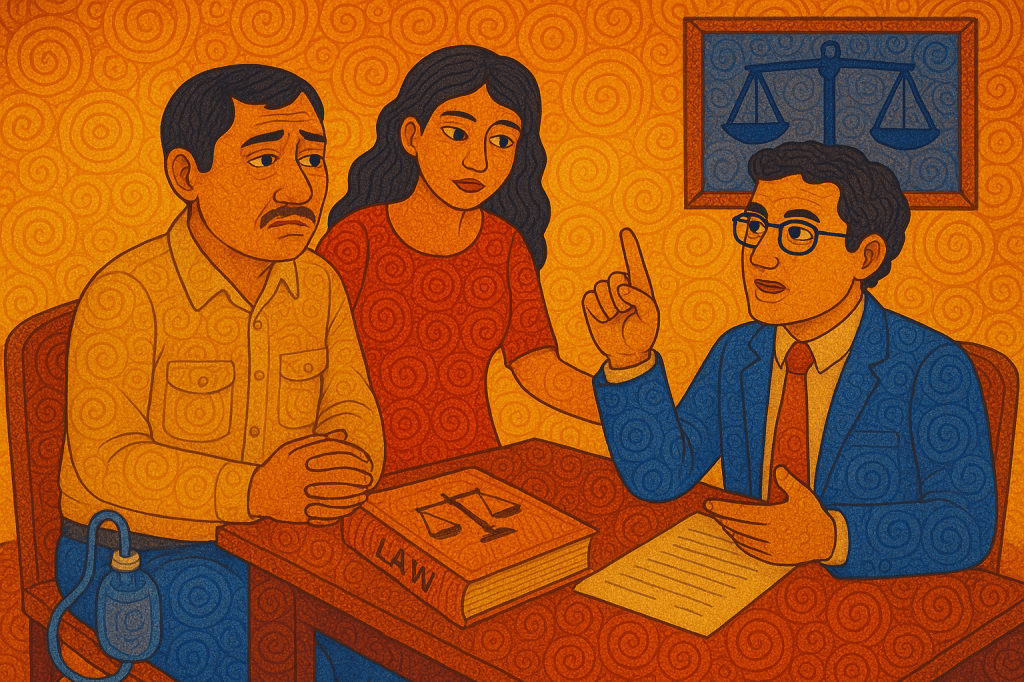
The Costs of Concealed Disability
Andi chose not to disclose his acquired disability to his employer after the accident, fearing that he would be let go as workplace safety protocols could exclude him from the worksite, which his visa is attached to. Only his closest friends and his supervisor knew about the accident, hospitalisation, the catheter and the urine bag which adds discomfort during ambulation, which results in chronic pain. His injury has led to a reduction in his workload. Due to this, he has more free time, so he has returned to voluntary work for a non-governmental organization (NGO) in Malaysia, that he once worked with before.
Andi feels uncomfortable to reside in the dormitory provided by the company out of embarrassment of someone finding out about his catheter. So instead, he stays at his wife’s house, and she can also assist with his catheter and urine bag. His wages are earned based on a daily rate, as such, he does not receive paid leaves, and now he rarely works, affecting his income. He feels deep misery for not being able to provide a secure future for his family, as well as not being able to function for his wife sexually. He has also expressed how he regularly loses the motivation to live.
Facing a Future in a Time of Vulnerability
Andi is uncertain whether he needs to stay in Malaysia to process his legal claims or if he can return to Indonesia to be with his children. He is also living the collective reality of how out-of-pocket payments impact the financial future of migrant workers with disabilities and their families, illustrating the gap in migrant labour protections. In this phase of his life, when he does not have physical and psychological therapy (partly because it has not been offered and partly because he is scared to seek it out due to fear of social exclusion), Andi is forced to suffer silently, furthering the impact of emotional distress. This provides a firm case for stronger psycho-social support and anti-discrimination safeguards that should be openly available not just in the communities but also in the workplace.
Images generated with assistance of OpenAI, images conceptualized and final edit by Ferdinand Paraan Jr.
 Disability Migration Network (DMN)