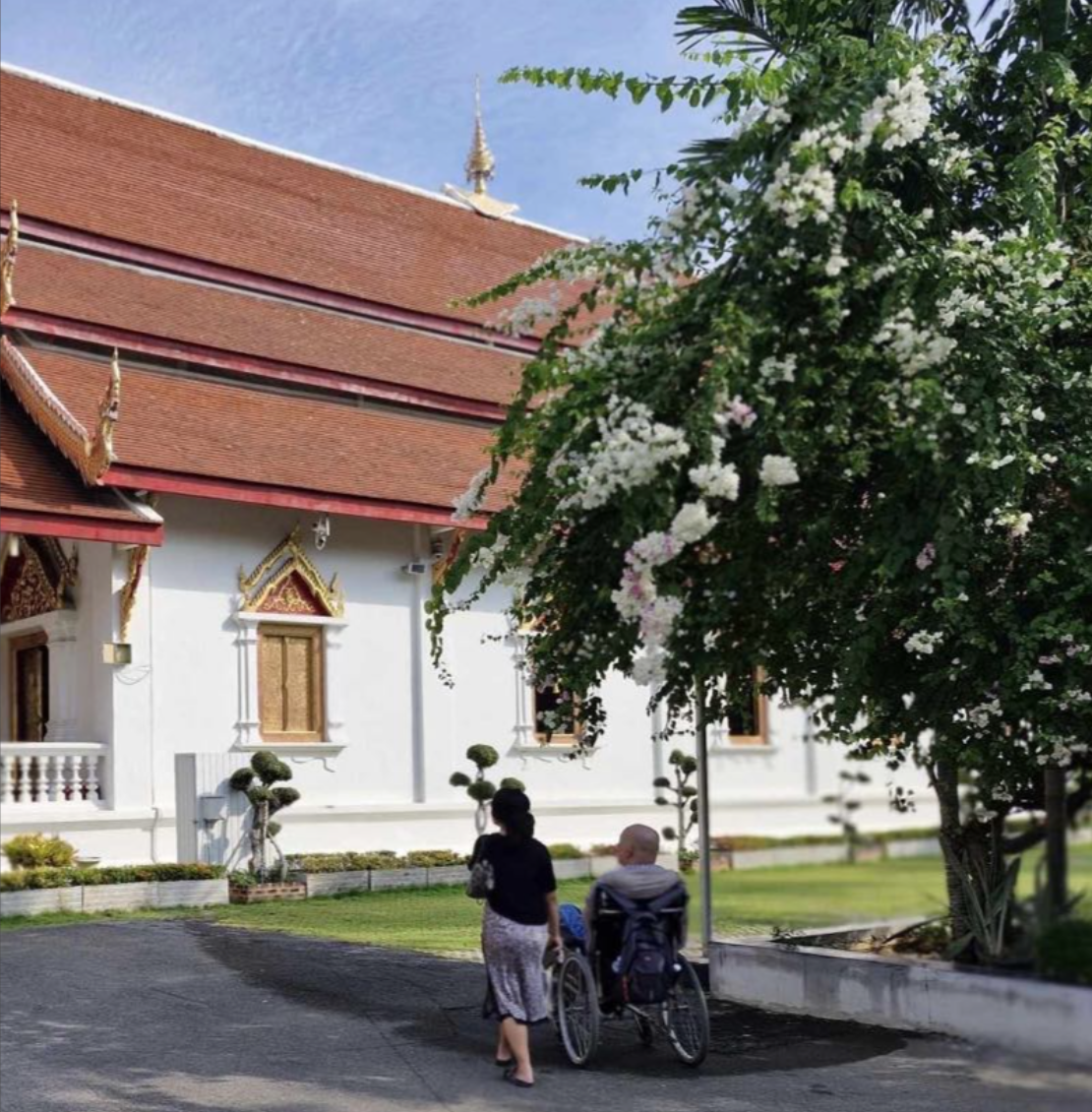
By Ma. Vhiktoria “Chavek” Siva
After a tussle with Manila traffic, a three and a half hour flight to Bangkok, a four hour layover at the Don Mueang International Airport, and two planes, the three-man and one-woman Disability Migration Network (DMN) research team finally landed in Chiang Mai.
The numerous emails and zoom calls finally culminated into a full-fledged research fieldwork that spanned 13 days across Chiang Mai and Bangkok – a brand new opportunity to hear stories of disabilities, life, and adventure.
Chiang Mai and the MAP Foundation
The team was warmly met by MAP Foundation’s Aksone Saysana, who has been vigilantly coordinating with the team even before the trip.

Work began early the next morning as the team met the first interview participant – a woman from Myanmar with a physical disability. Her interview was the first of many more as the team met two more participants from the Shan State, both wheelchair users with acquired physical disabilities.
It is not an overstatement to say that the stories shared by the participants will forever hold a space in my heart. Their stories of migration and disabilities reflect their strength, their grit, and their character. When asked if they have experienced any violations to their rights throughout their migration journey, a participant said,
“I didn’t have those rights from the start, so there’s nothing to violate”.
I remember pausing after hearing those words before hurriedly typing them. You simply can not and should not forget a quote like that.
All of our data gathering efforts in Chiang Mai were made possible with the help of the MAP Foundation, an organization that works with and empowers migrant workers from Burma and their communities. Their help and generosity made our three days in Chiang Mai all the more memorable. We extend our deepest gratitude to Brahm Press, Aksone Saysana, and Kaema Yodsin of MAP Foundation.

Busy Bangkok
The rest of the trip was spent in Bangkok. We completed two more interviews – a participant with a disability who is thinking of becoming a migrant worker and a current migrant worker with a disability who is working as a domestic worker in the central business district of Bangkok. These interviews would not be possible without the help of the UN-ILO and HomeNet Thailand who helped us identify these participants. We are grateful for all of their help.
We also held a Focus Group Discussion (FGD) with three advocates with disabilities: Sureeporn Yupa Miyamoto of DeeDee Consulting Co.,Ltd., Nalutporn Krairiksh of thisAble.me, and Peerapong Jarusarn of Thailand Association of the Blind (TAB). Their valuable insights made the discussion lively and we are thankful for their unique perspectives.
Visiting the UN-ILO TRIANGLE
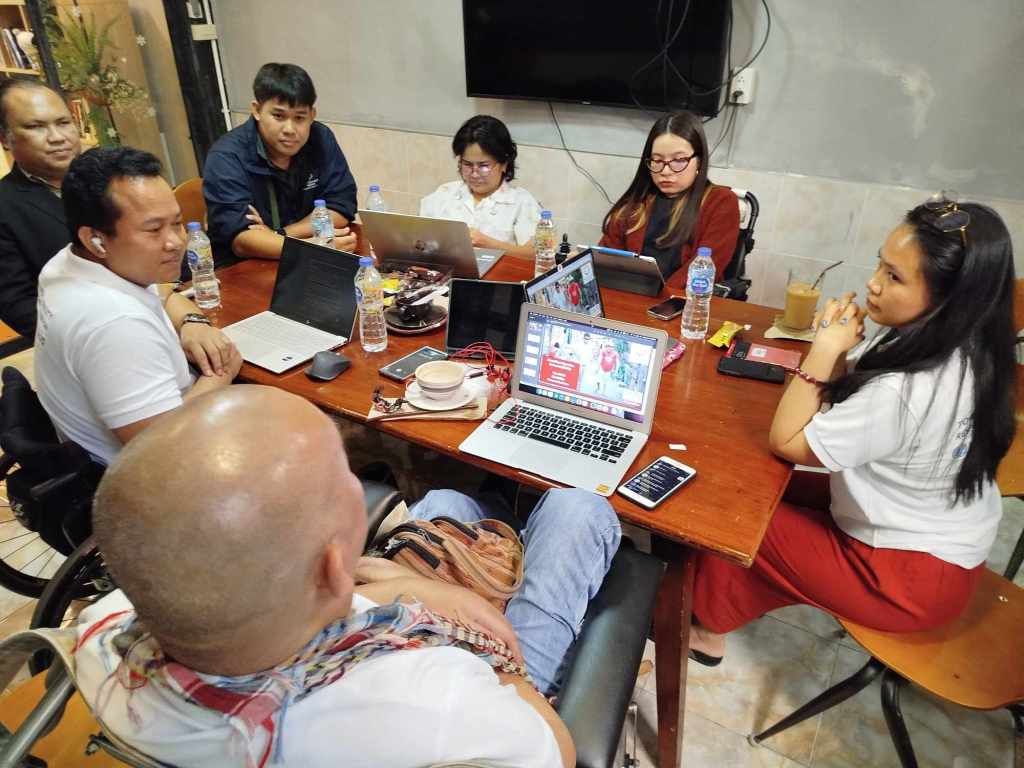
We were also fortunate enough to visit the UN-ILO TRIANGLE office in Bangkok where we held a Key Informant Interview (KII) with Pongsakorn Passakornnatee, Managing Director of Jobs Worker Service Co., Ltd., Thailand. He shared his experiences in recruitment of migrant workers and also discussed with us the ways we can move forward with disability-responsive labor migration.
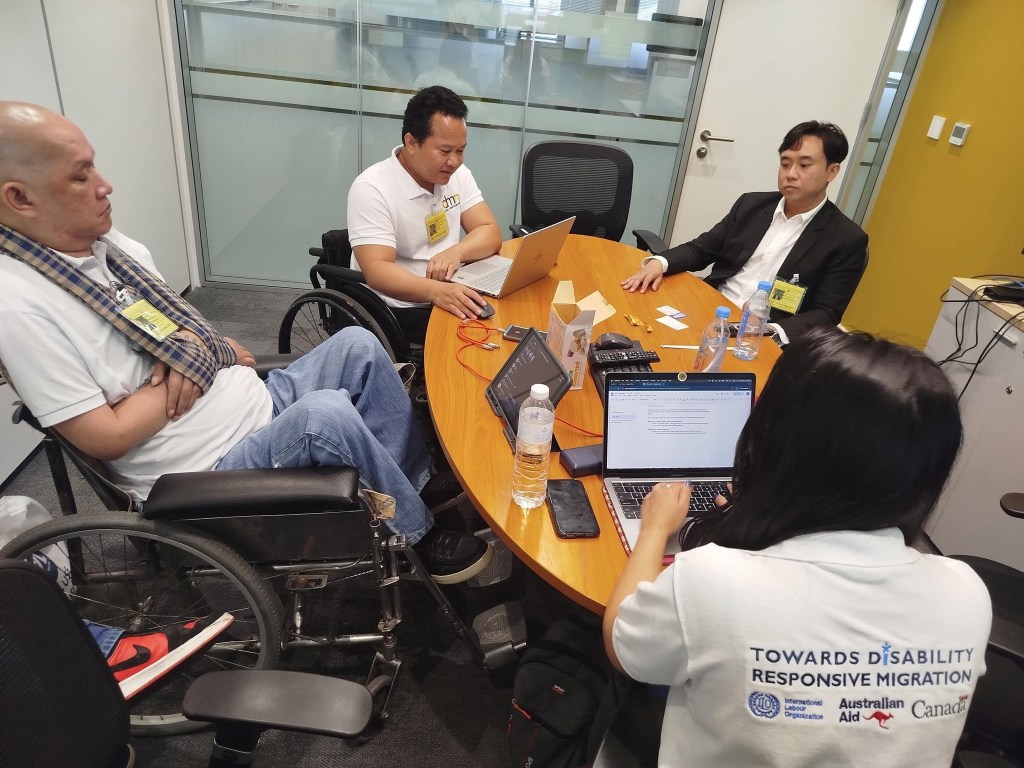
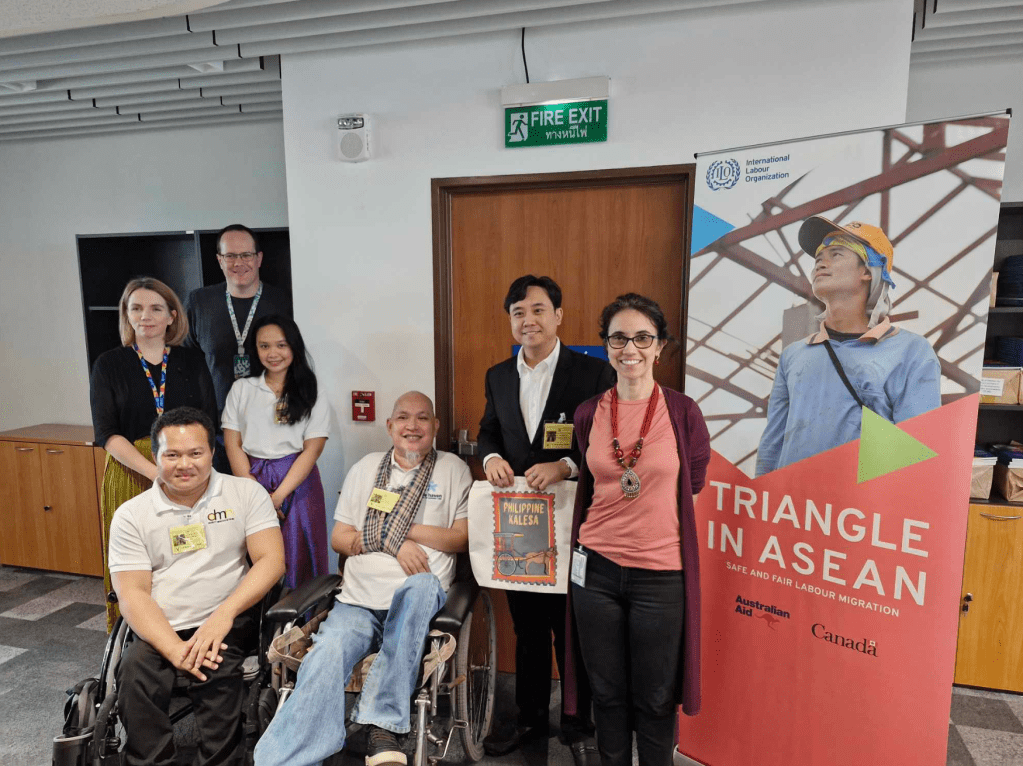
Afterwhich, we had a short meeting with the UN-ILO TRIANGLE team (Rebecca Napier Moore, Andreas Schmidt, and Marja Paavilainen) where we talked about the research and our possible next steps forward. It was delightful to finally meet them in person after all the zoom calls we’ve had and the emails we’ve exchanged. We were also delighted to meet Chonticha Tangworamongkon of ILO a few days later during one of our interviews in Bangkok. We are grateful for the guidance and support of the UN-ILO TRIANGLE towards a disability responsive migration and this visit has only strengthened our resolve in our advocacy.
We would also like to thank our Thai to English interpreter, Sawang Srisom not only for helping us communicate with our participants but also for helping us identify participants and for his valued recommendations.
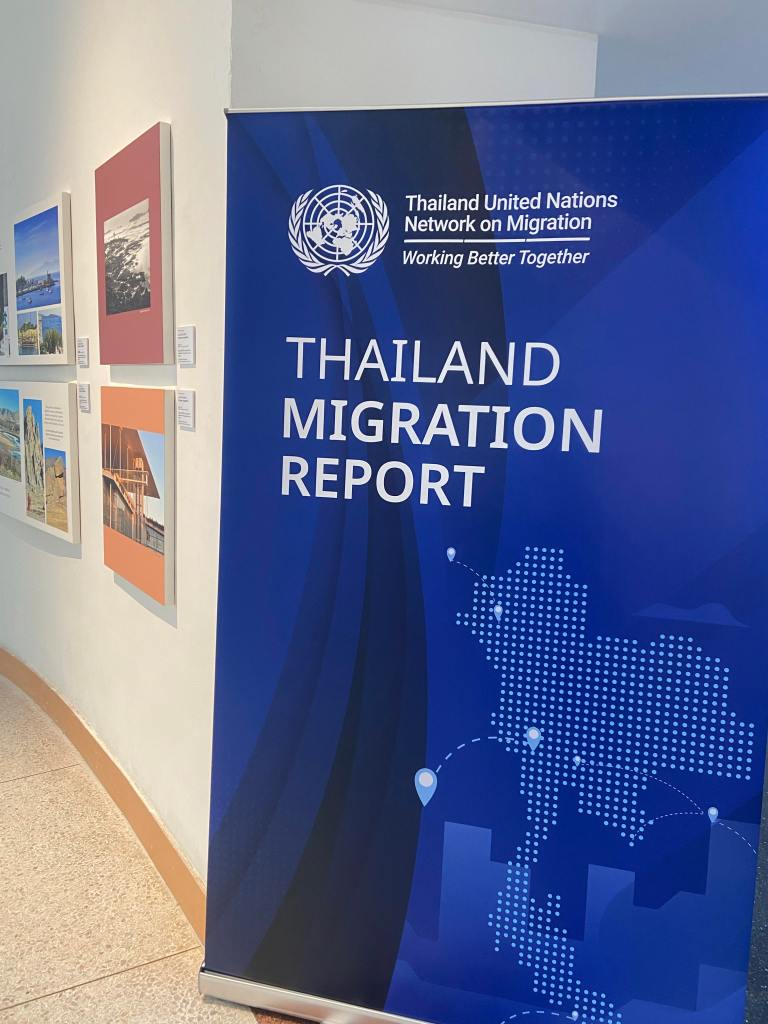
Report Launch of the Thailand Migration Report
Our schedule lined up perfectly to attend the report launch of the ILO’s Thailand Migration Report that was held at the Bangkok Art and Culture Centre. Coming from the Philippines which is primarily a labor sending country, it was interesting to read a report from the perspective of a country of destination like Thailand and see international labor migration through a different standpoint. I attended two parallel panel discussions: Towards human rights and access to justice and Leave no one behind and working conditions of migrants.
Beyond the Mango Sticky Rice and Pad Thai
Hearing different stories and being immersed in field work day in and day out can be harrowing after some time. Aside from the research we were doing, it was also important to look around and appreciate the sights and sounds of the cultural experience surrounding us. We made sure to walk the streets of Bangkok at night, leave our wishes with the lanterns at Wat Phra That Doi Suthep in Chiang Mai, and haggle with vendors at Patpong Night Market. I even ate a scorpion (tasted bitter like dirt) and some silkworms (tasted a tiny bit better than the scorpion) in the streets of Chiang Mai.

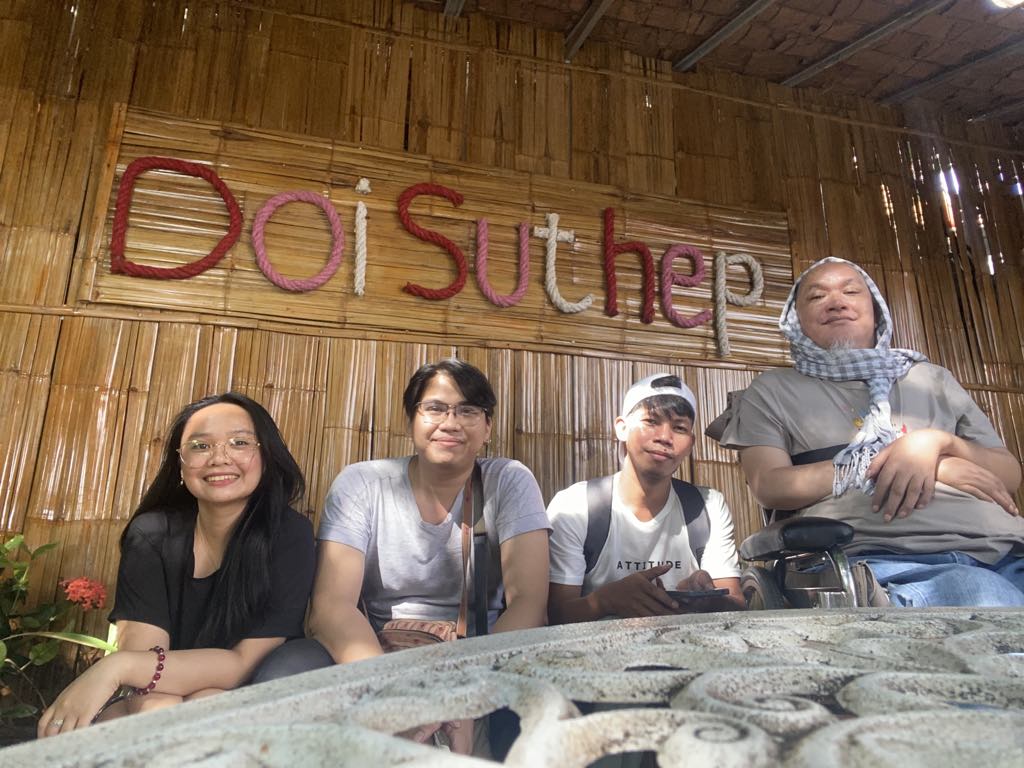
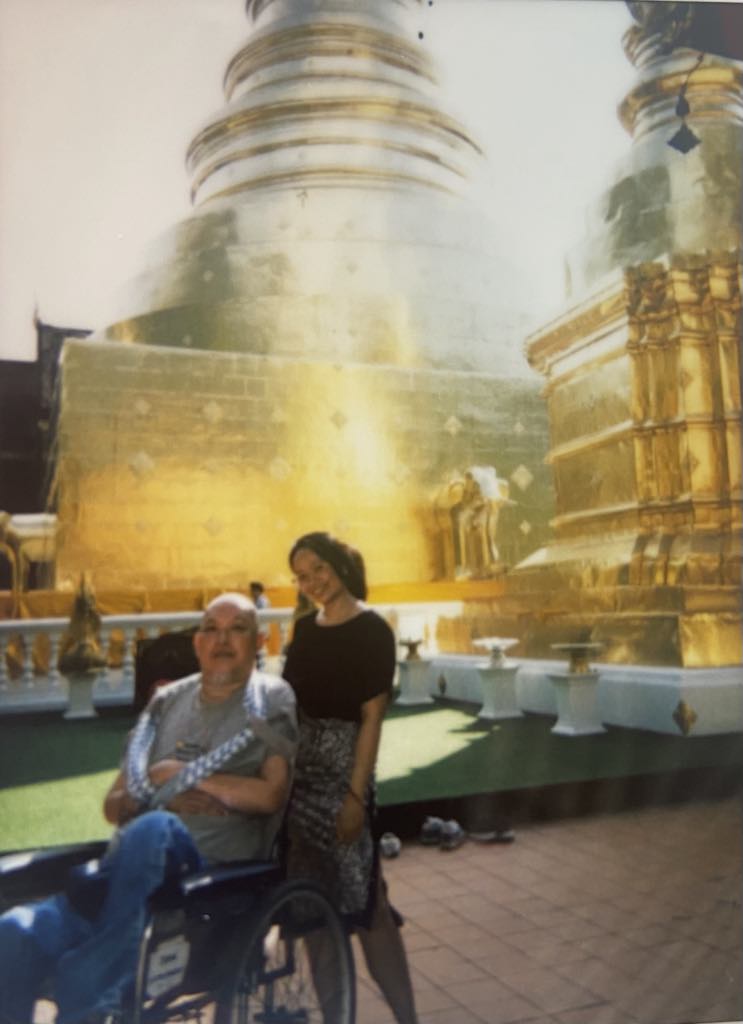

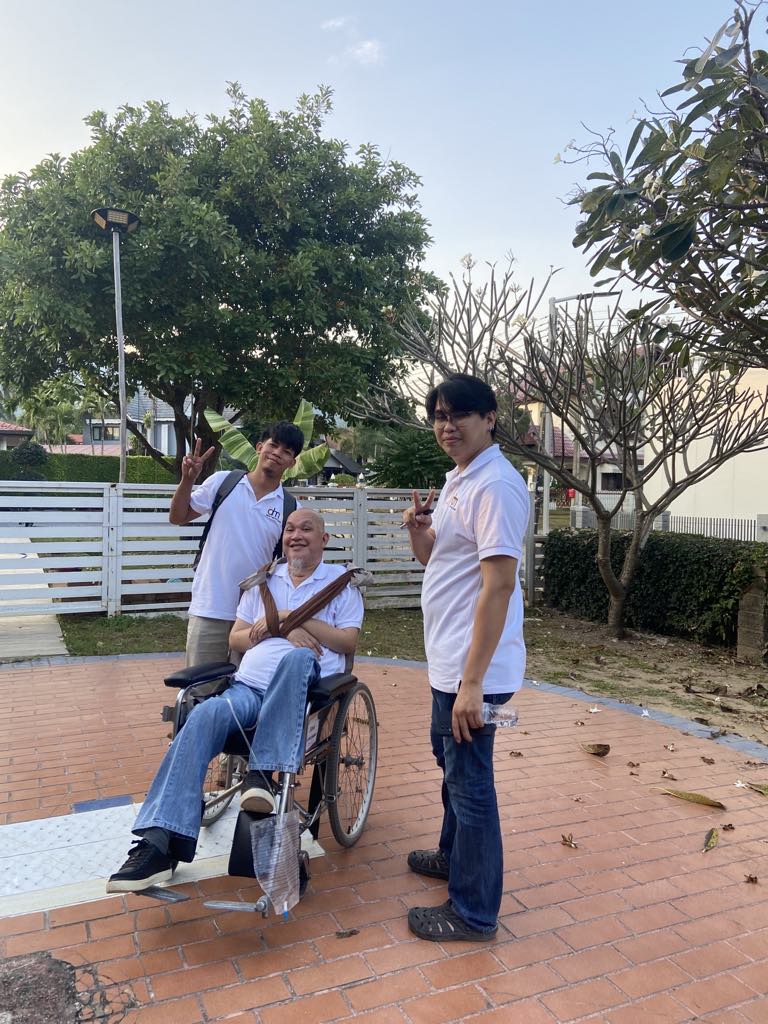
More than anything, I will never forget the people I met and the stories I heard. The DMN is forever grateful to everyone who became a part of this research through the brave act of sharing their own experiences as migrant workers and as persons with disabilities. I am honored as a researcher to have their trust and I gently hold their stories with the respect and reverence they merit.
I hold this experience close to my heart and I am honored to be a part of a research and an advocacy that stands firm in resilience and human rights.
 Disability Migration Network (DMN)